


A small mole or a milium is vaporized layer by layer with a CO2 laser, and each lesion has its own price before VAT. Mole removal in Seoul at Pixelab Beauty Clinic starts by looking at every spot, because a mole that has changed or looks irregular needs a medical check before any laser is used.
Is it for you?
Which moles suit CO2 laser removal
A mole, or melanocytic nevus, is a cluster of pigment cells. Some sit flat at the junction between the outer skin and the layer below; others rise above the surface because the cells extend deeper. Milia are a different thing: tiny white cysts filled with keratin, the protein of the outer skin, found around the eyes and cheeks.
Laser removal suits marks that look benign and have stayed the same. A CO2 laser turns the tissue into vapor, so nothing remains to send to a laboratory. For that reason a mole with warning features is assessed medically before any decision about laser. The features doctors look for are asymmetry, an uneven border, more than one color, growth, and any change over time.
Flat junctional moles have research behind laser removal: in one study, small acquired junctional moles were cleared with a CO2 laser, with dermoscopy helping to follow them afterward (Köse, 2020).
Usually a good fit
- Small moles that look the same as they did years ago
- Milia, the tiny white bumps near the eyes or cheeks
- Raised moles that catch on clothing or a razor
- A short stay, since a same-day flight home is possible
- Able to keep the spots out of the sun while they heal
We may suggest waiting
- A mole that has grown or changed shape or color
- A mole that bleeds, itches or has a ragged edge
- Infection, a cold sore or broken skin at the site
- Keloid-prone skin (judged spot by spot)
- Expecting the area to heal with no mark at all

Your doctor
Founder and medical director · Korean board-certified plastic surgeon
“From learning to teaching.”Trained at Seoul & Incheon St. Mary's Hospitals. Now leading hands-on sessions for visiting doctors.
- ResidentPlastic surgery, Catholic Univ. Seoul St. Mary's Hospital
- FellowClinical fellow, Incheon St. Mary's Hospital
- AlmaTitanium Global Trainer
- JeisysDENSITY ALPHA TIP Ambassador
- MemberKorean Society of Plastic and Reconstructive Surgeons
Before & after
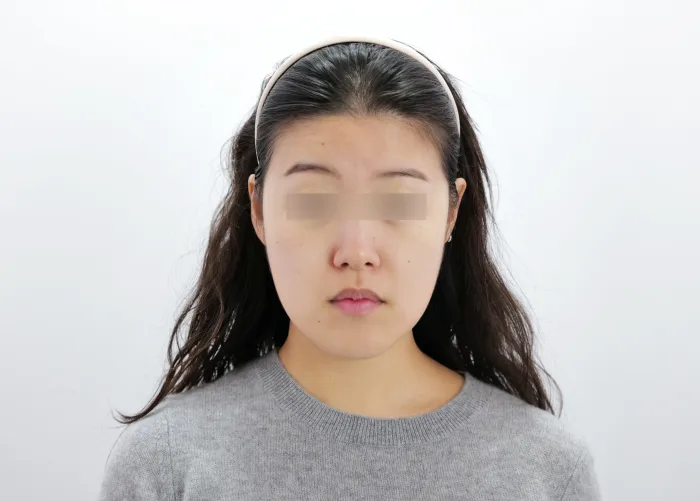
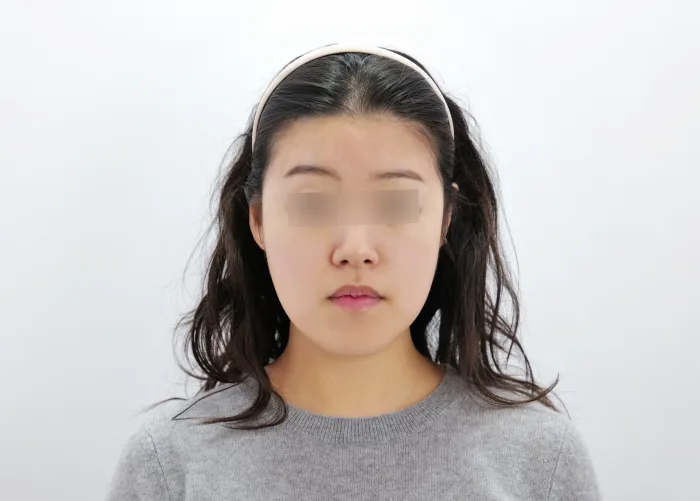
Before and after
 BEFORE
 AFTER
How it works
How a CO2 laser removes a mole
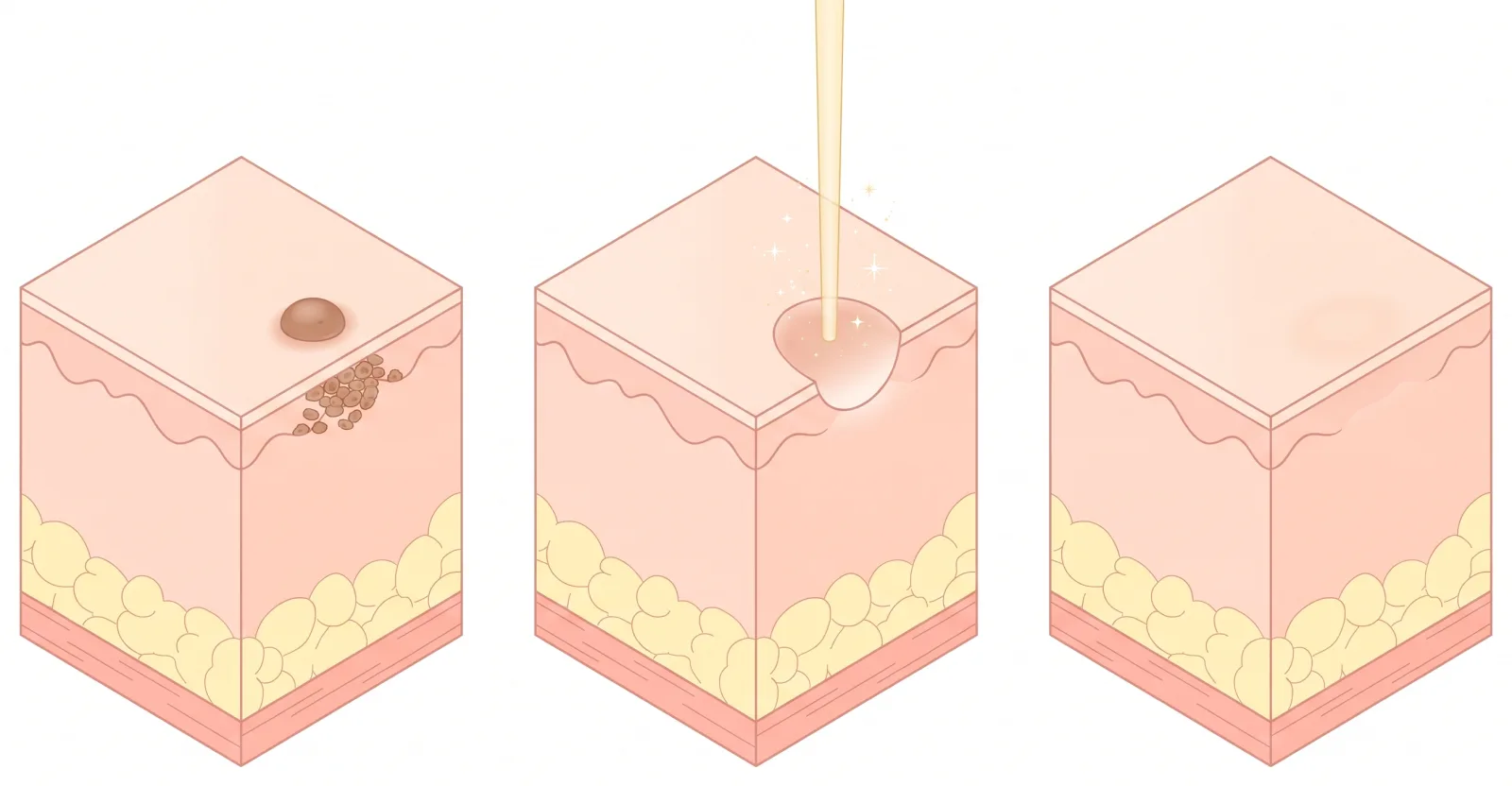
A CO2 laser emits infrared light that the water inside skin cells absorbs. The cells heat instantly and turn to vapor, so the laser takes tissue away one thin layer at a time with little bleeding. For a raised mole the passes continue until it is level with the surrounding skin and the pigment is cleared to the depth chosen for that spot. A milium needs much less: the laser opens the thin skin over it so the keratin inside can be cleared.
Depth is the main trade-off. Treating deeper removes more of the pigment cells, which lowers the chance of the mole coming back, yet it leaves a larger wound and a higher chance of a visible mark. A shallower pass heals with a softer result but leaves more cells behind. A randomized trial of a related technique, shave removal, showed the same balance: more recurrence than full excision, with better appearance and satisfaction (Camini, 2020).
Pigment and skin tone also shape the plan. Healing skin can darken for a while, and for moles present since birth, a systematic review found no high-quality evidence on long-term laser results (Eggen, 2018).
On the clinic's price sheet the CO2 line covers both moles and milia and is charged per lesion. Flat brown age spots are a separate item treated with the MIIN laser.
Spot check
At consultationEach mole is looked at for size, color, border and any history of change.
Topical numbing
Numbing cream is spread over the marked spots before the laser.
CO2 laser passes
Tissue is vaporized in thin layers until the spot reaches the planned depth.
Wound care
The small wounds are covered and home care for the scab is explained.
Progress check
After the single session, the spot is reviewed as it heals; more is added only if needed.
Spot removal options at Pixelab Beauty Clinic
| Criteria | CO2 mole removal | CO2 milia removal | Age spot removal (MIIN) |
|---|---|---|---|
| Treats | Flat or raised moles (nevi) | Tiny white keratin cysts | Flat brown age spots (lentigo) |
| How it works | Vaporizes the mole in layers | Opens the thin cover of each cyst | Laser aimed at surface pigment |
| Main limit | Can recur; pigment change possible | New milia can still form | Spots can return with sun |
| Priced | ₩20,000 + VAT per mole | ₩20,000 + VAT per milium | Per 1 cm of spot |
Age spot removal is a separate line on the price sheet; this page covers the CO2 options.
At a glance
CO2 mole removal at a glance
| Numbing | Numbing cream |
|---|---|
| Downtime | Scab and redness for 1–2 weeks; pigment change possible |
| Recommended sessions | One session, then a check; more only if needed |
| How long results last | A removed mole can come back |
| Earliest flight home | Same-day flight home is possible |
Prices
Mole Removal Cost in South Korea
CO2 mole removal is charged per lesion, and milia sit on the same per-lesion line, so your total grows with the number of spots treated. The price is listed before VAT; 10% VAT is added at payment, and the card shows both figures so you can multiply by your own count.
Ask for a written quote that lists each mole or milium to be treated. Because a check follows the session and a mole can return, ask too how any extra session would be charged.
CO2 mole or milium
Per lesion₩20,000 + VAT₩22,000 with VATBook nowRecovery
Healing after CO2 mole removal
Small wounds covered; same-day flight home is possible
A scab forms; keep it clean and let it come off by itself
Scab and redness fade over 1–2 weeks
Use sunscreen; watch for darkening or pigment returning
Safety
Possible side effects of laser mole removal
- Post-inflammatory hyperpigmentation: the spot turns darker for a time, more likely with sun on healing skin.
- Lighter skin where the mole was.
- A small dip or raised mark, which is more likely the deeper the treatment.
- Recurrence, when pigment cells left below the treated layer show through again.
- Infection of the small wound.
- Keloid or thickened scarring in skin prone to it.
The research on removing moles is limited in size. A study of face moles removed by a shave technique in darker skin reported acceptable appearance and low recurrence (Rezk, 2024), yet that method differs from a CO2 laser, so its numbers do not transfer directly.
Message the clinic if the area becomes hot, swollen, increasingly painful or starts to ooze, or if a treated mole later grows back and changes.
The before-and-after photos on this page were taken at the clinic; results vary with each mole and skin type.
Evidence
Research behind this page
- Carbon dioxide ablative laser treatment of acquired junctional melanocytic neviJournal of Cosmetic Dermatology · 2020 · Köse O · doi:10.1111/jocd.13579
A study in which small acquired junctional moles were cleared with an ablative CO2 laser, with dermoscopy useful for follow-up.
- Shave Excision Versus Elliptical Excision of Nonpigmented Intradermal Melanocytic Nevi: Comparative Assessment of Recurrence and Cosmetic OutcomesDermatologic Surgery · 2020 · Camini L et al. · doi:10.1097/dss.0000000000002666
A randomized trial in 45 patients: shave removal of non-pigmented intradermal moles recurred more often than elliptical excision but looked better and satisfied patients more.
- Laser treatment of congenital melanocytic naevi: a systematic reviewBritish Journal of Dermatology · 2018 · Eggen C et al. · doi:10.1111/bjd.16094
A systematic review of laser treatment for congenital moles that found short-term improvement but no high-quality evidence on long-term effect or safety.
- Dermoscopic-Guided Shave Removal of Acquired Facial Melanocytic Nevi in Dark-Skinned IndividualsDermatologic Surgery · 2024 · Rezk A · doi:10.1097/dss.0000000000004077
A study of 64 people with darker skin in whom dermoscopy-guided shave removal of face moles gave acceptable appearance and low recurrence; a different method from CO2 laser.
FAQ
Mole removal questions
How much does mole removal cost in Seoul?
CO2 mole removal is ₩20,000 per mole before VAT, which comes to ₩22,000 with the 10% VAT. Milia are charged on the same per-lesion line, so the total depends on how many spots are treated. A written quote lists each one before you pay.
Is there an English-speaking clinic in Seoul for mole removal?
Yes. Pixelab Beauty Clinic has an English interpreter on staff, and you can message us on WhatsApp in English before your visit, for example with how many moles you want removed and where they are. We will get back to you as soon as possible.
How long does it take to heal after CO2 mole removal?
A scab and redness last about 1 to 2 weeks, and the spot can darken for a while as it settles. Larger or deeper moles leave a bigger wound, which affects where you land in that range. Let the scab fall off on its own and keep the area out of strong sun.
Can I fly home on the day of mole removal?
Yes. The clinic advises that a same-day flight home is possible. Cabin air is dry, so keep the small wounds covered and avoid touching them on the plane. Since the session is followed by a check, ask how that check works for someone who lives abroad.
What kind of doctor works at the clinic?
Dr. Jongkeun Song is a Korean board-certified plastic surgeon and the Medical Director of Pixelab Beauty Clinic. Plastic surgery includes the removal of skin lesions and the care of the marks they leave, which bears on how deep a mole should be treated.
Do I have to pay a deposit for mole removal?
Deposit and cancellation terms are not shown on this page. If any payment is requested before your visit, ask for the terms in writing first, including what happens if your travel plans move.
Will a mole come back after laser removal?
It can. The clinic notes that a removed mole may recur, and pigment cells lying deeper than the treated layer are one source. The single session is followed by a check, and a further session is added if pigment shows again.
Can milia be removed with the same CO2 laser?
Yes. The CO2 line on the price sheet covers both moles and milia, charged per lesion. Milia are tiny keratin-filled cysts; the laser opens the thin skin over each one so the contents can be cleared, which leaves a much smaller wound than a mole.
Does CO2 mole removal hurt?
Numbing cream goes on before the laser. A brief sting or a sense of heat is still possible, since the laser works by heating tissue. Mention any past reaction to topical anesthetics when you book, so another option can be considered.
Should a mole be checked before it is removed?
Yes. A mole that has grown, changed color, bleeds or has an uneven edge needs a medical assessment first. A CO2 laser vaporizes tissue and leaves nothing for laboratory analysis, so such a mole is not simply lasered.
Will mole removal leave a scar?
A small mark is possible. Laser wounds heal with new skin, and the spot may look lighter, darker or slightly dipped for a time. Going deeper lowers the chance of the mole returning but raises the chance of a visible mark, a balance weighed for each spot.
Can I claim mole removal on my health or travel insurance?
We cannot tell how your insurer treats cosmetic mole removal done in another country. Your provider can answer that, and if you plan to claim, keep the itemized receipt the clinic gives you.